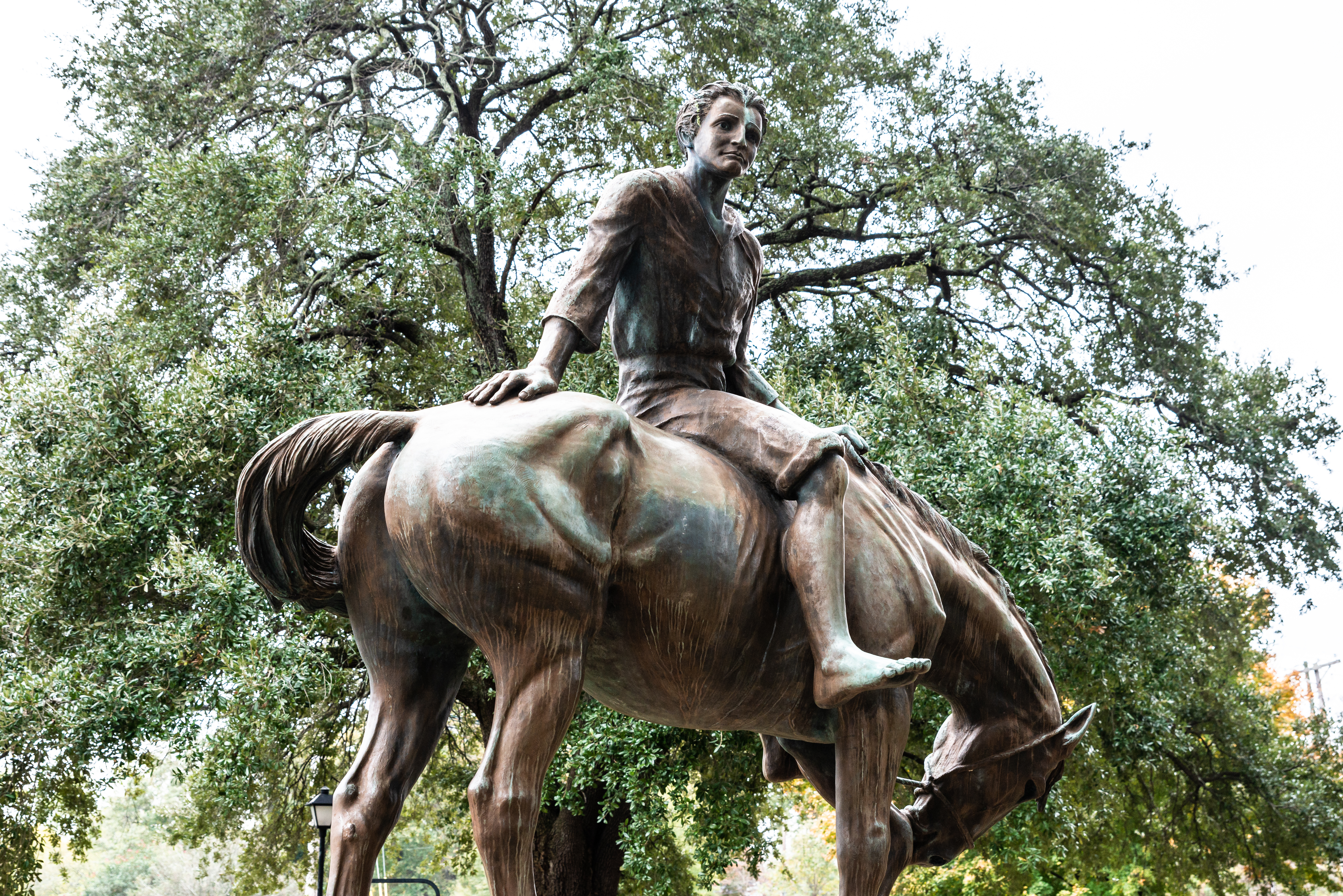
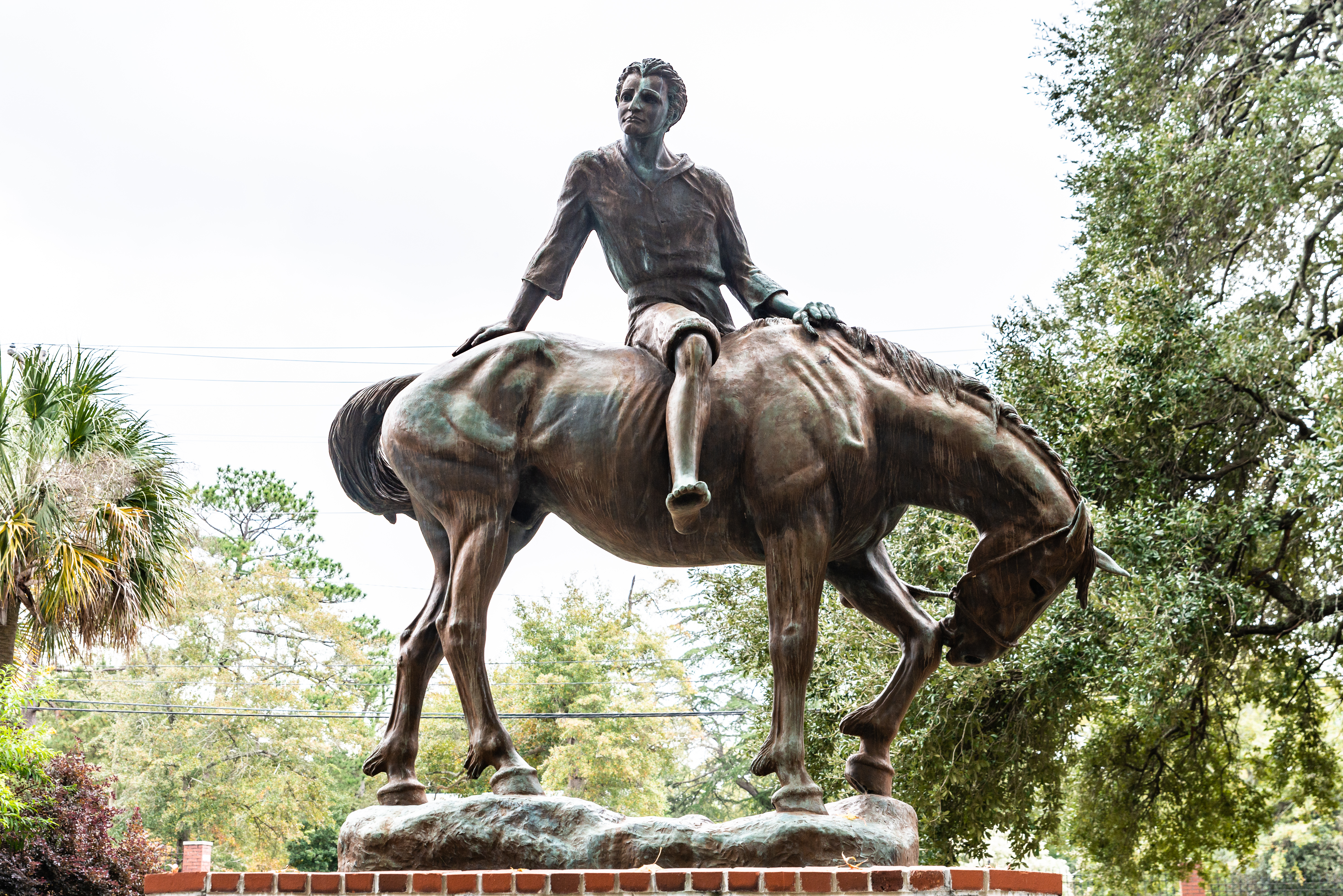
Huntington’s works, Youth Taming the Wild and In Memory of A Work Horse, deal in an intense depiction of natural forces and the will of man to control them. The one is of a strong youth trying to curb the wild nature of the animal, with both fighting for dominance over the other as their forms are exerted to the upmost extent. The other is of man and beast acting as one as they move as one fighting the unseen wind and storm. Each sculpture is in part a struggle against nature and the celebration of the human spirit, specifically in regard to American history. Young Andrew Jackson on a Horse depicts one of the nation's early presidents, as a juvenile, who is noted for his fierce, contentious personality and for being considered a hero, by some. His relationship with the horse is unclear, but it is apparent that he feels at ease with the animal and trusts it by the natural slope of the shoulders and resting of the hand on the hindquarters.
Symbolically, the man and horse are united, carried across the wilderness together by their shared fate as called for by the traditions of images. For Anna Hyatt Huntington, the selection of the equestrian for the campus of Columbia College probably was not a decision that she passed considerable time on. For her, the image of Jackson in his youth was an ideal portrayal of untapped potential. She knew what potential could appear as, having honed her abilities with the guidance of her father, mother, husband and her own mind. Anna’s art started as a mere depiction of “the real”, an interpretation of her world. As she grew, her world became focused on “the ideal”, whether that was in the form of pleasing figural representations or her perceived notions from study. Jackson became an image of youth; their potential and imagined worth exhibited in the frame of a mere boy who had lost it all, but looked beyond hopefully into the future