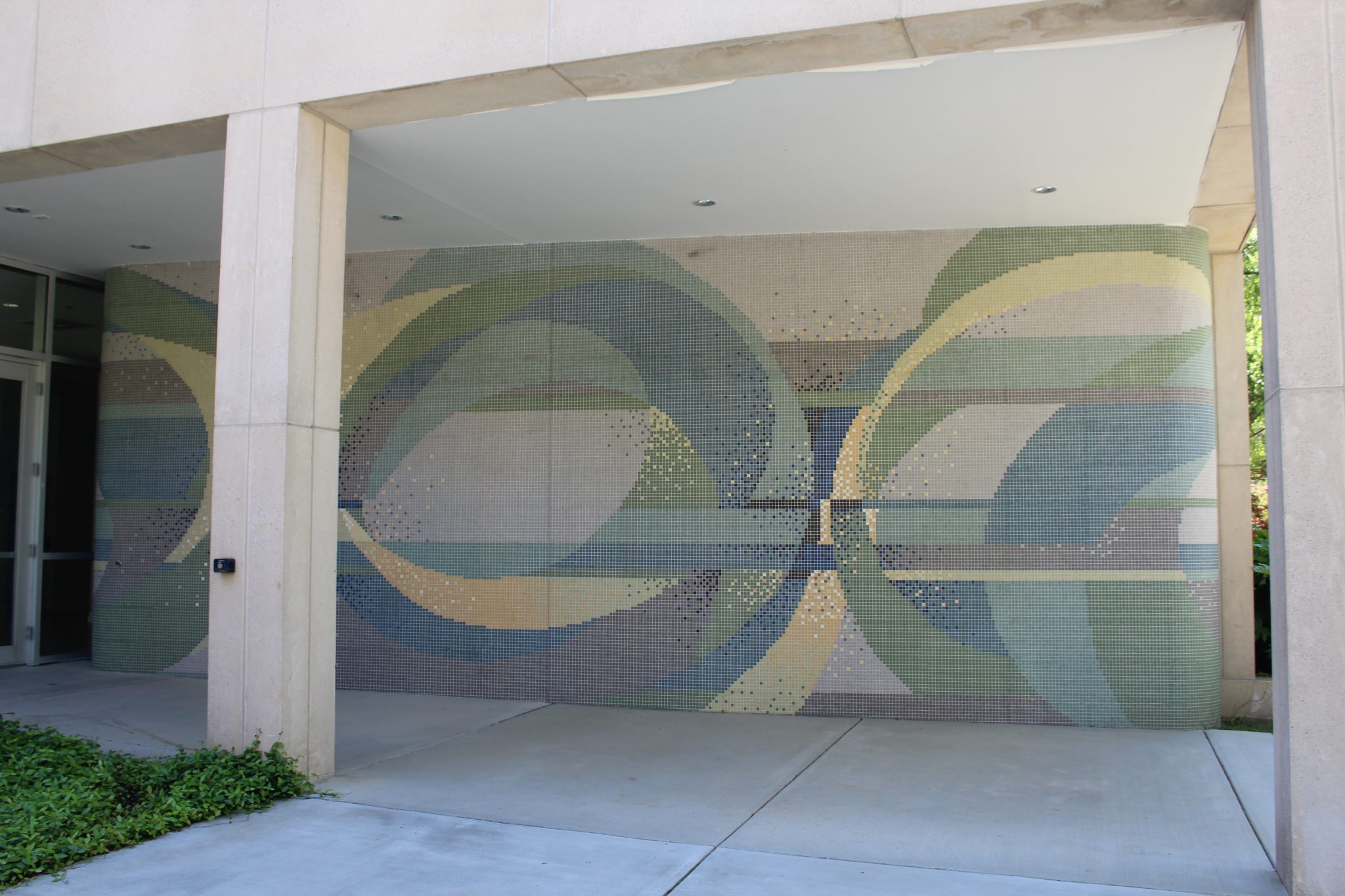
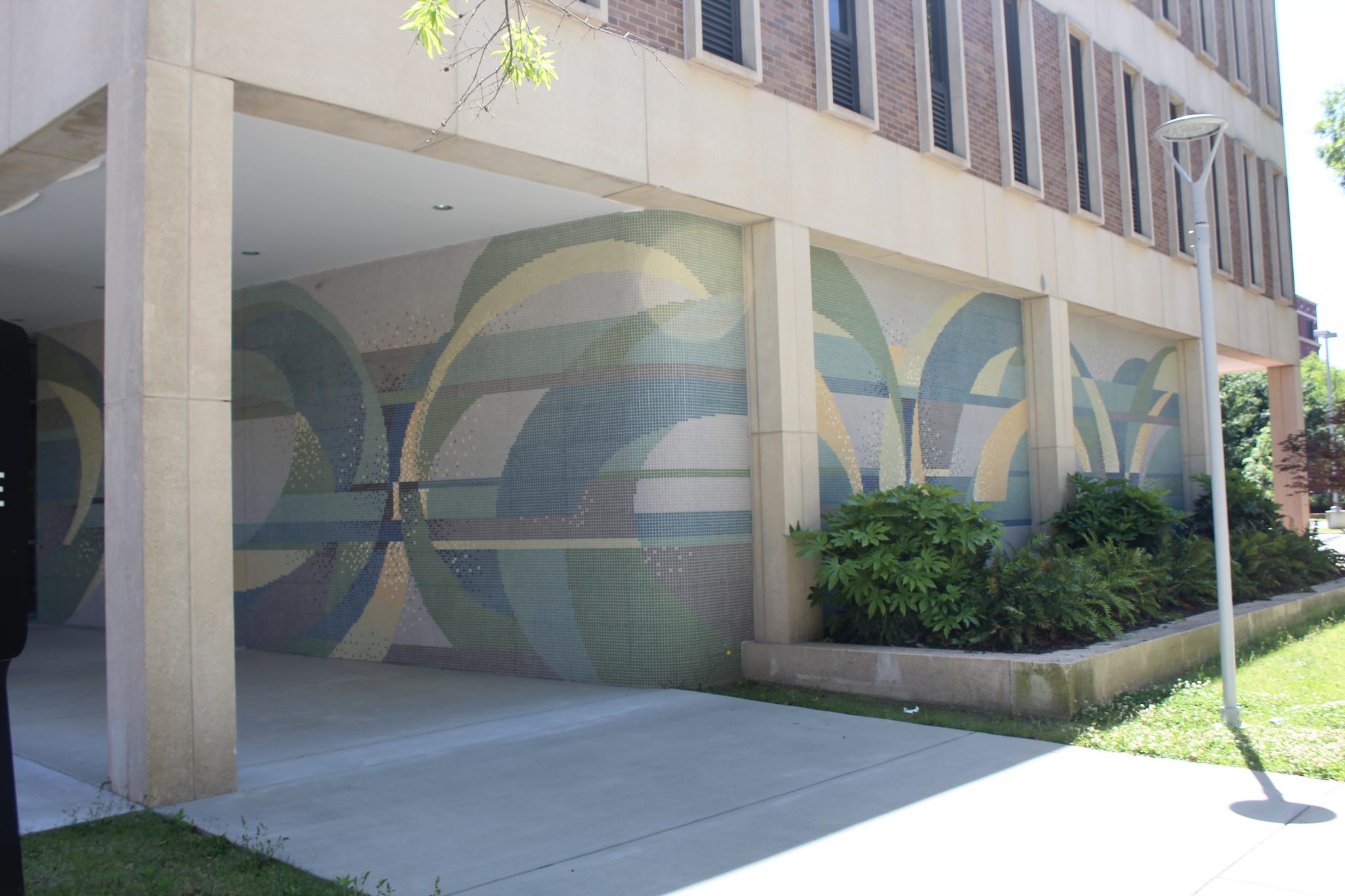
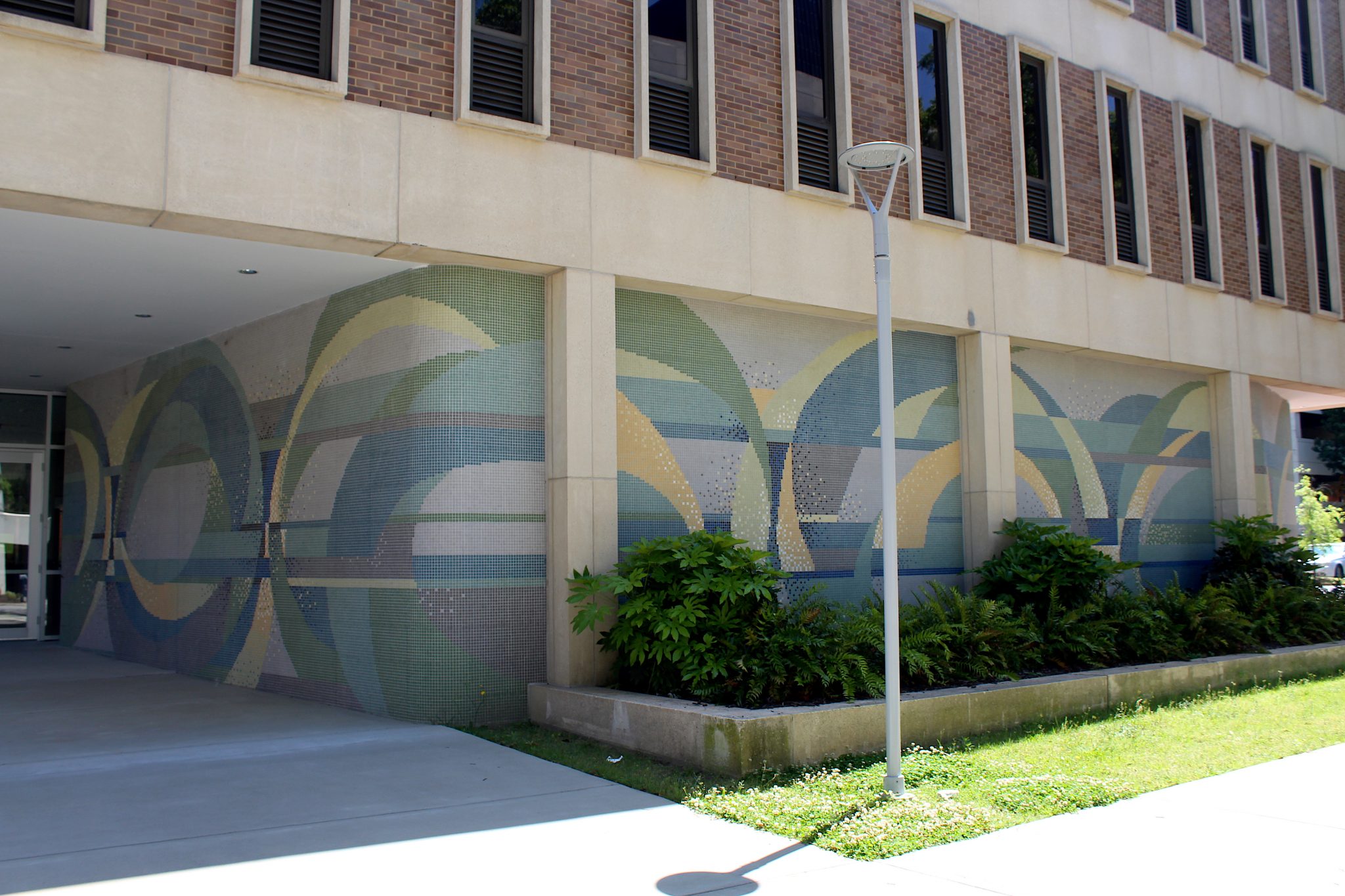
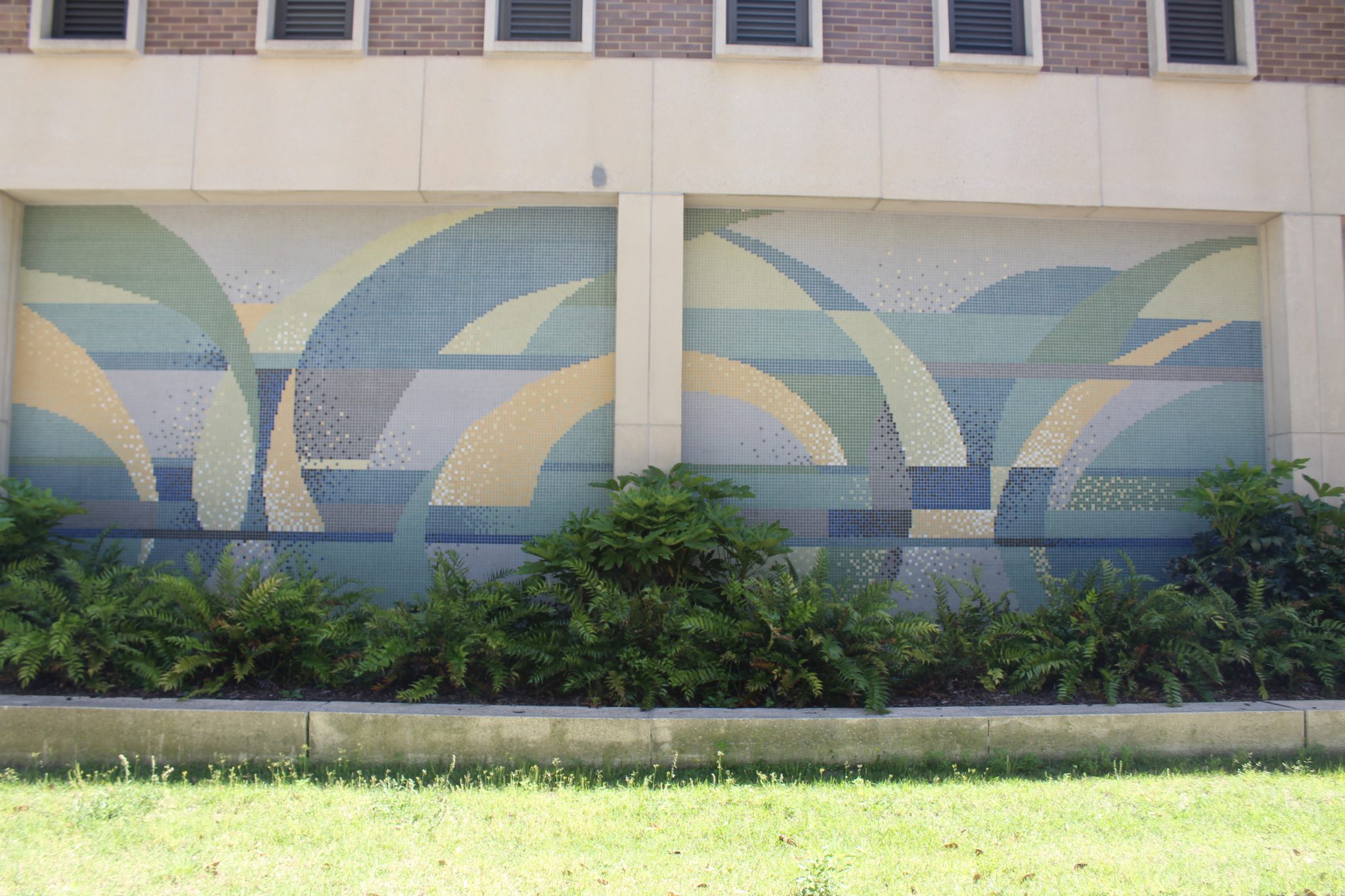
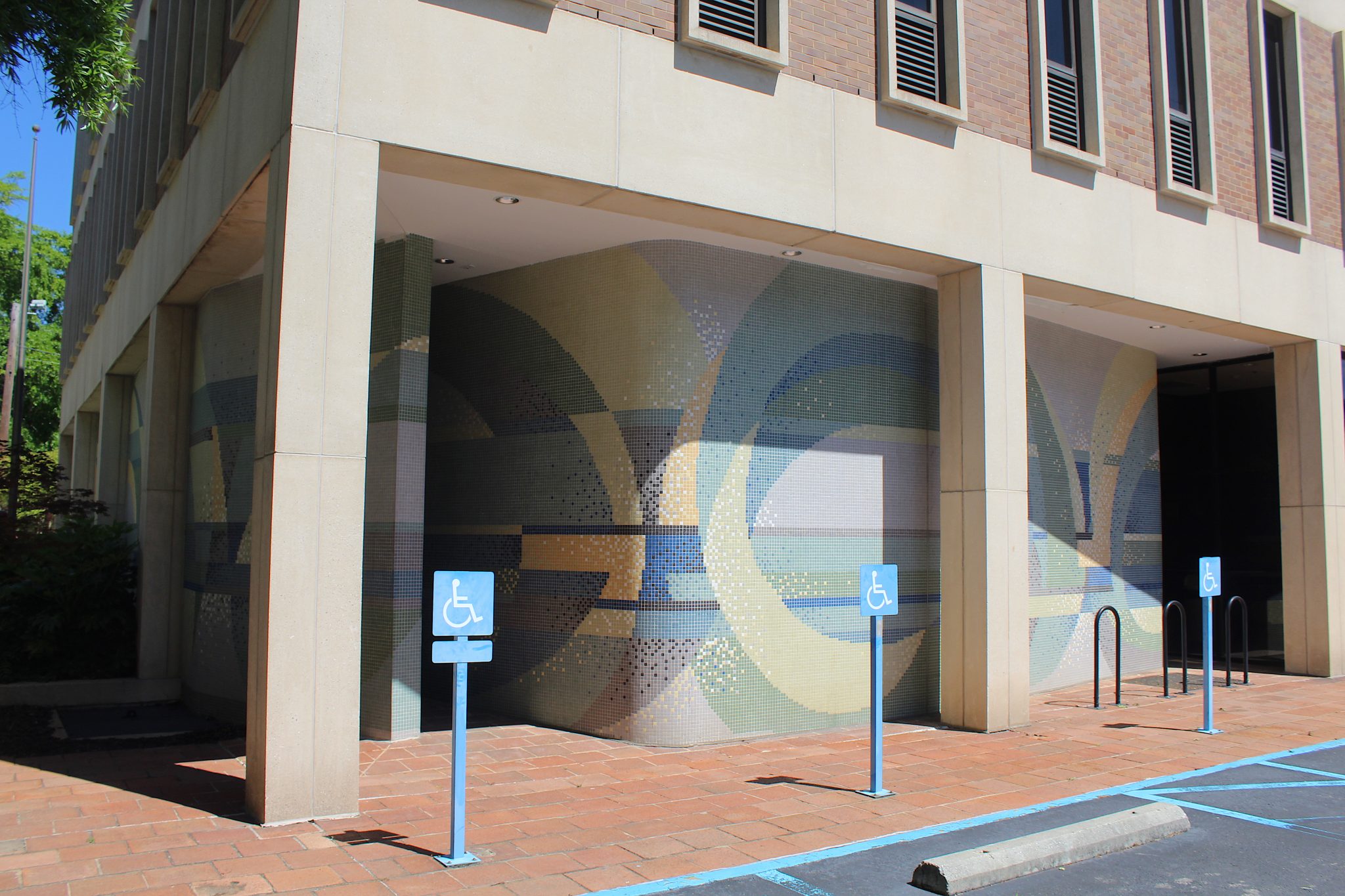
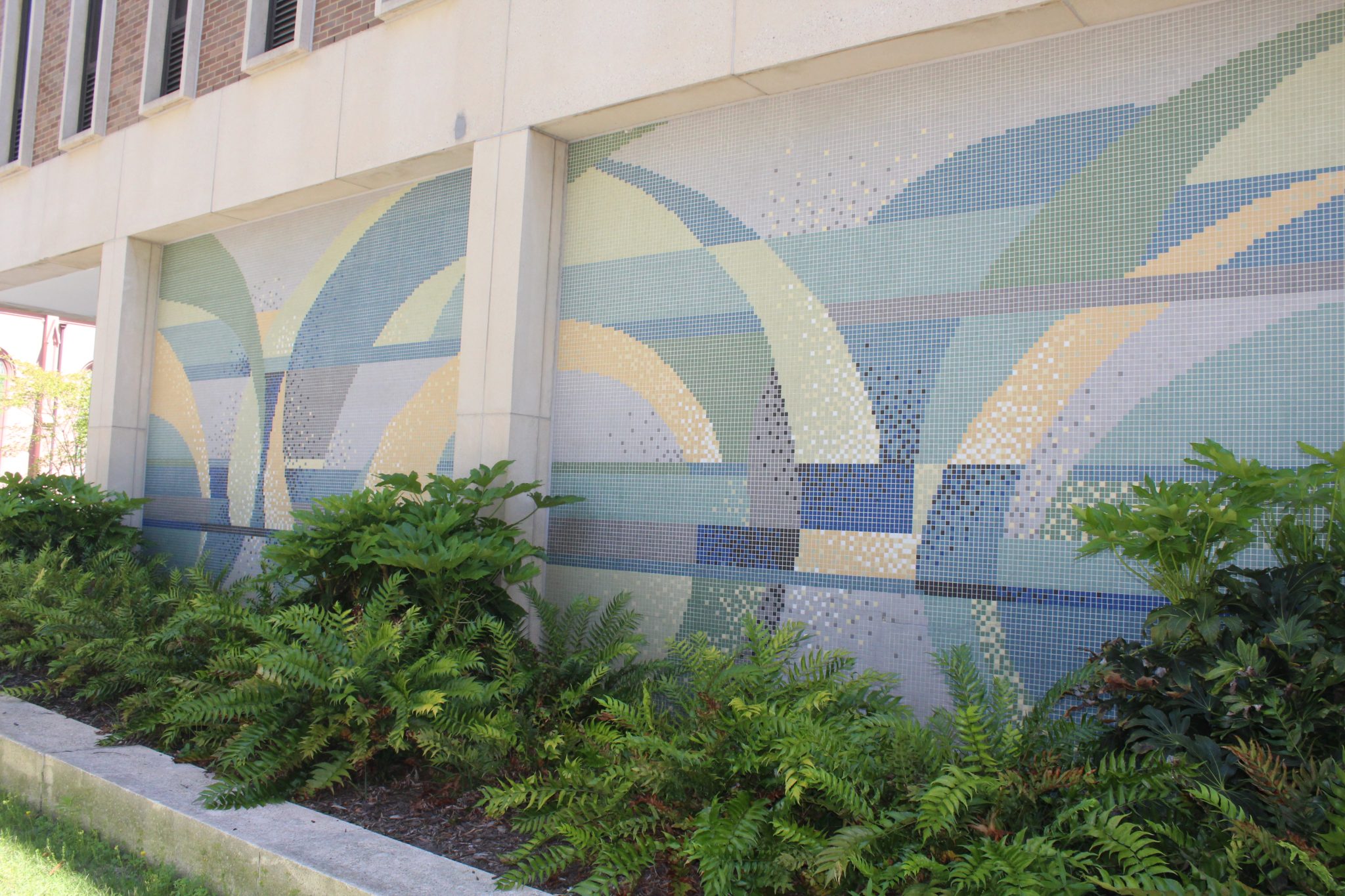
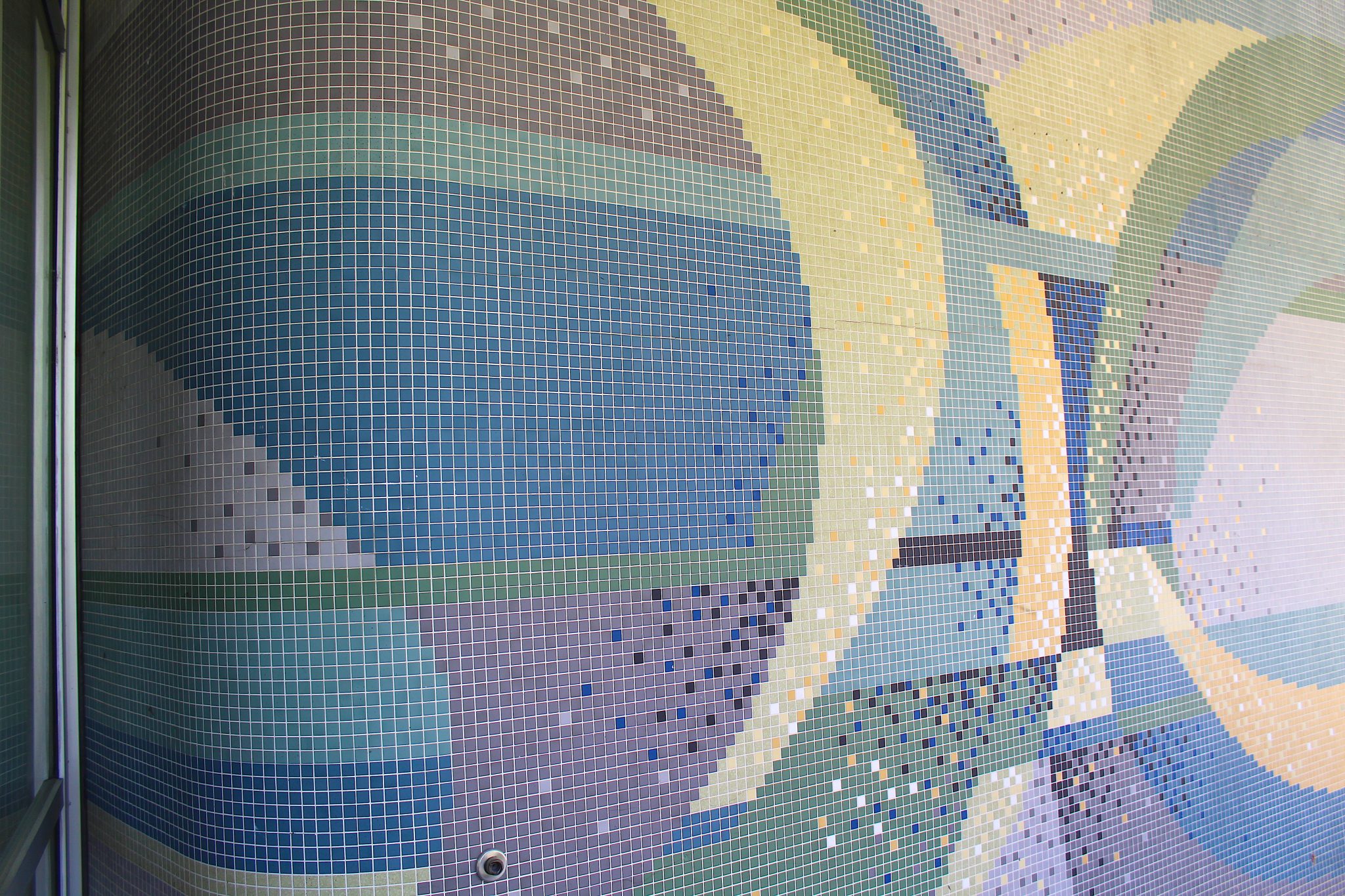
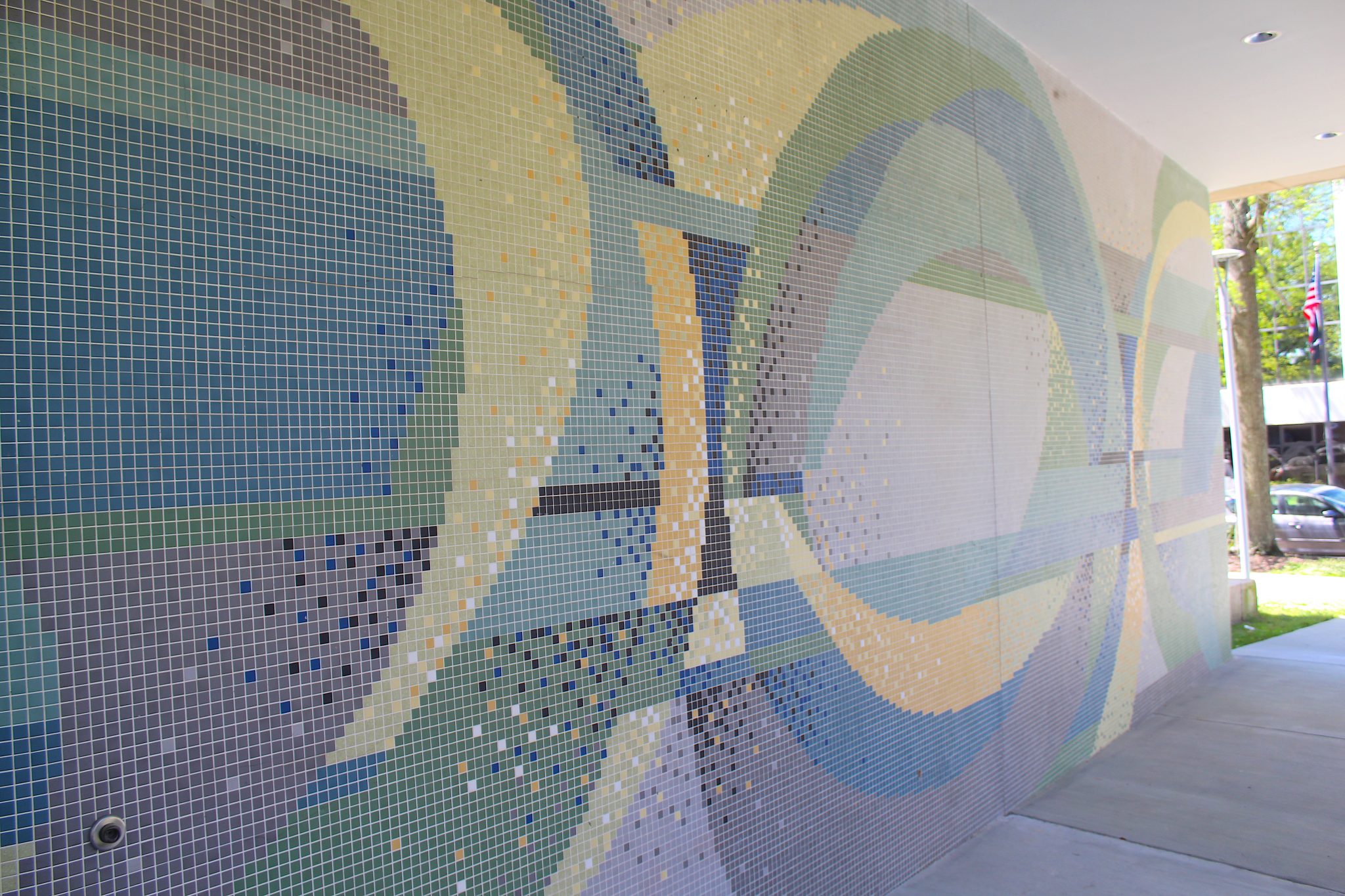
Rembert’s pieces that were incorporated with architecture such as the brick panels at the Columbia College Library, the relief at the airport,and the mural on the SCE&G building were not just related by artist, but also by architect. Catharine Rembert worked with the architect Phelps Bultman on many works. He was the one who actually requested that she do the piece on the old SCE&G building (Now, First Presbyterian Church).
The building was constructed in the 1960's. During the time of modernism when the building was constructed, the function of architecture became aesthetics. This idea came from Europe, which Bultman could have learned while in Germany. In the 1920s, the Bauhaus entered Germany, bringing the approach to modernism in architecture and design. The combination of the architectural design and art on the exterior could have correlated with this idea of modernism.
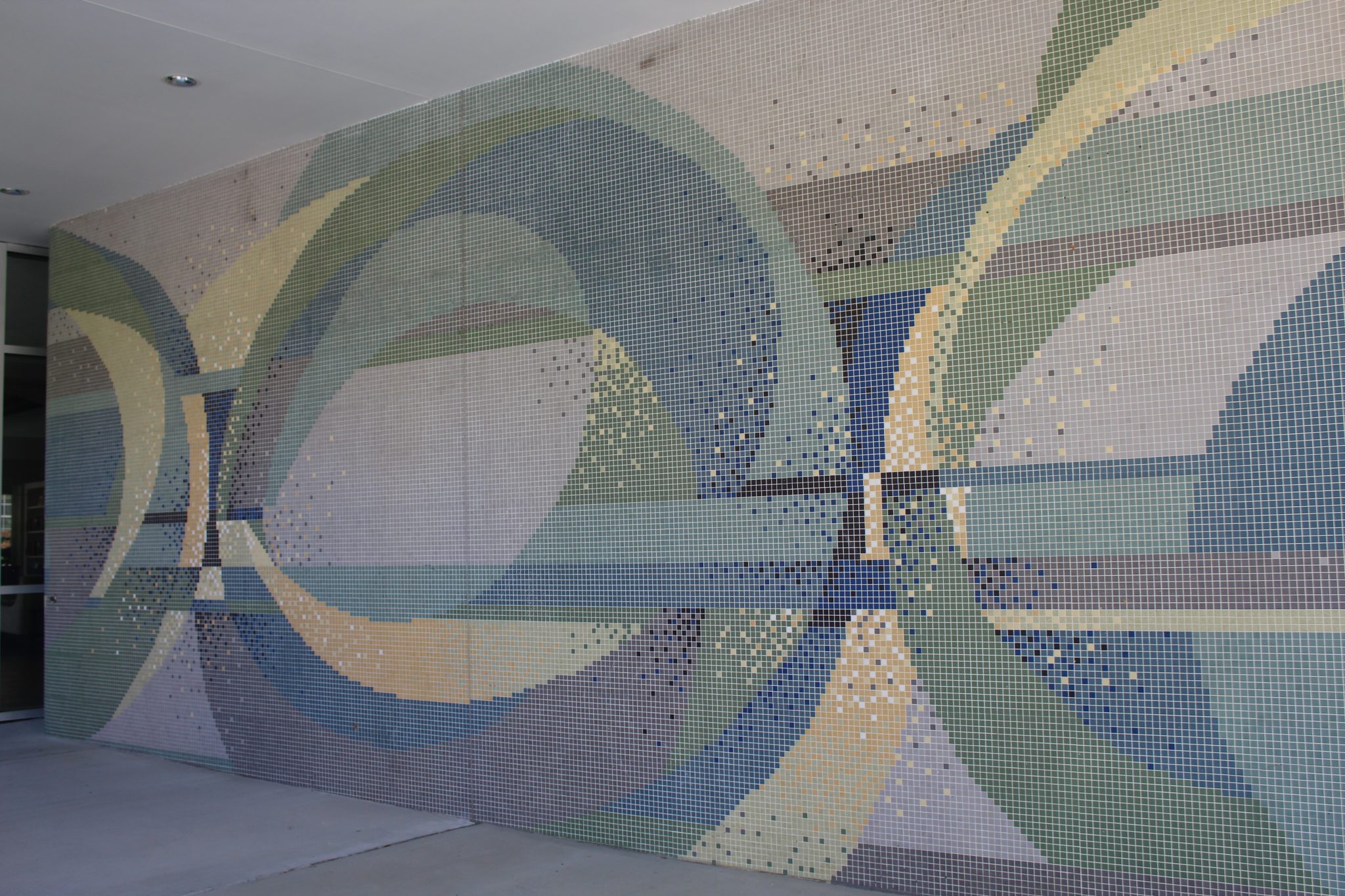
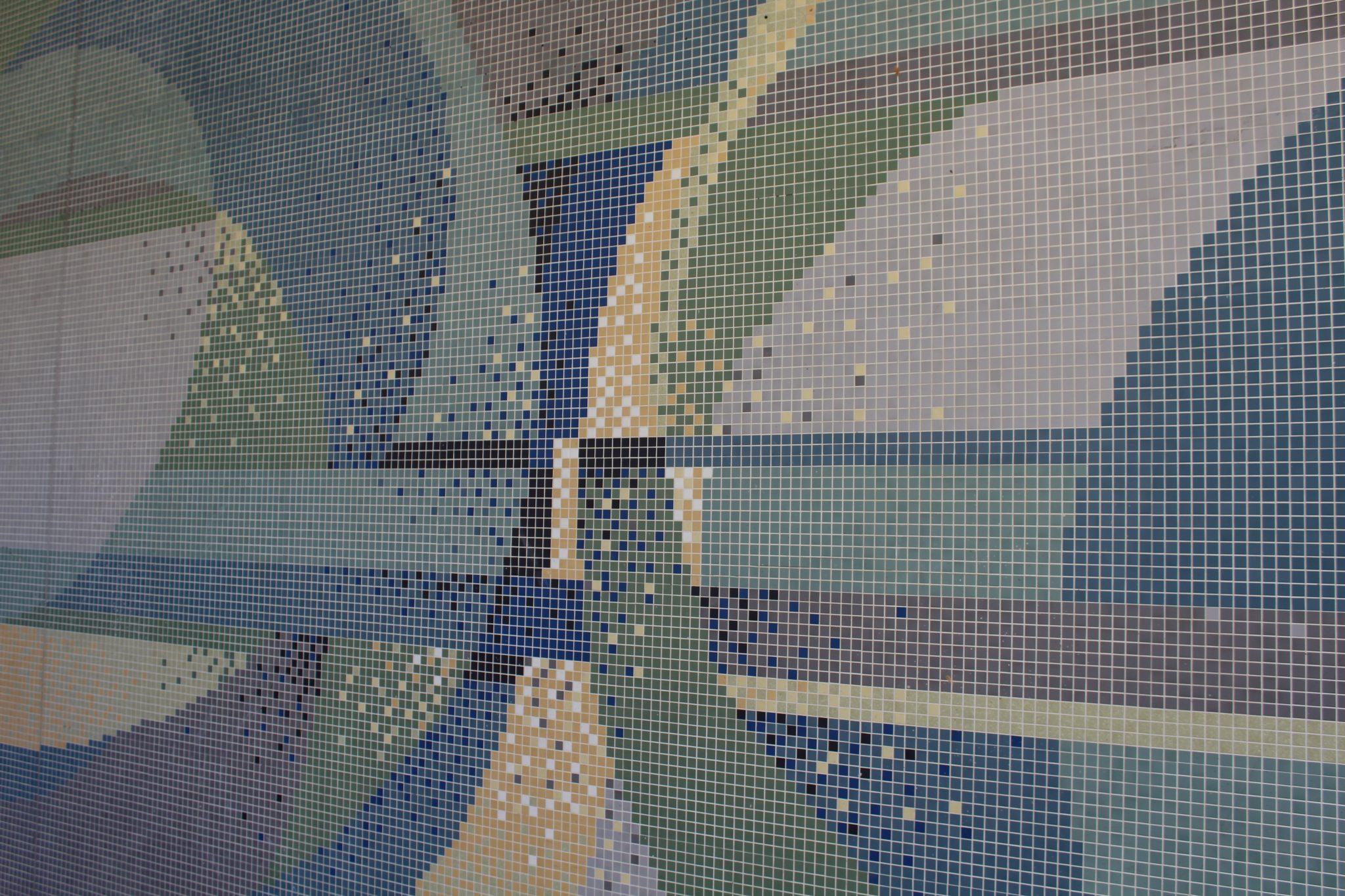
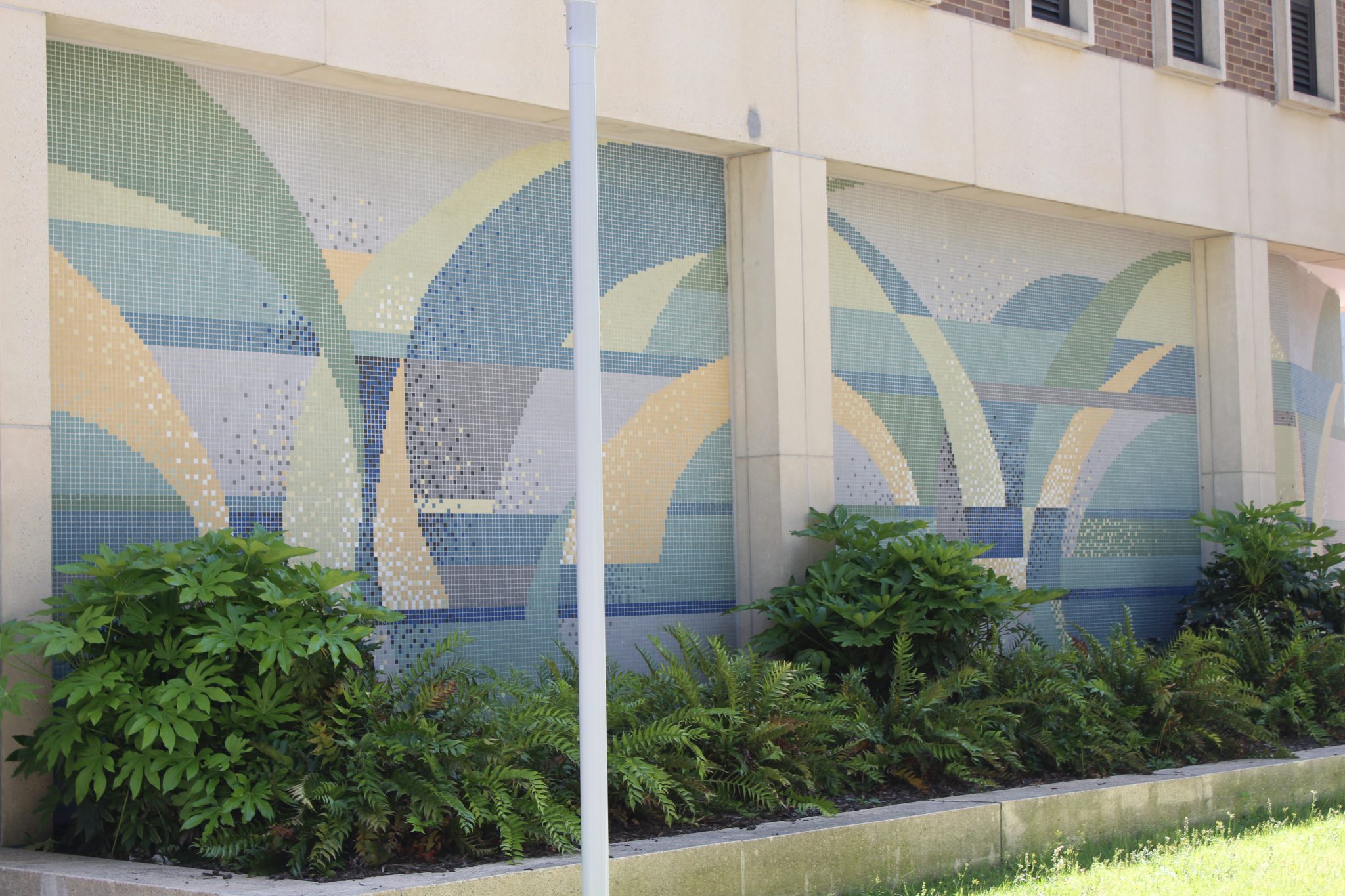
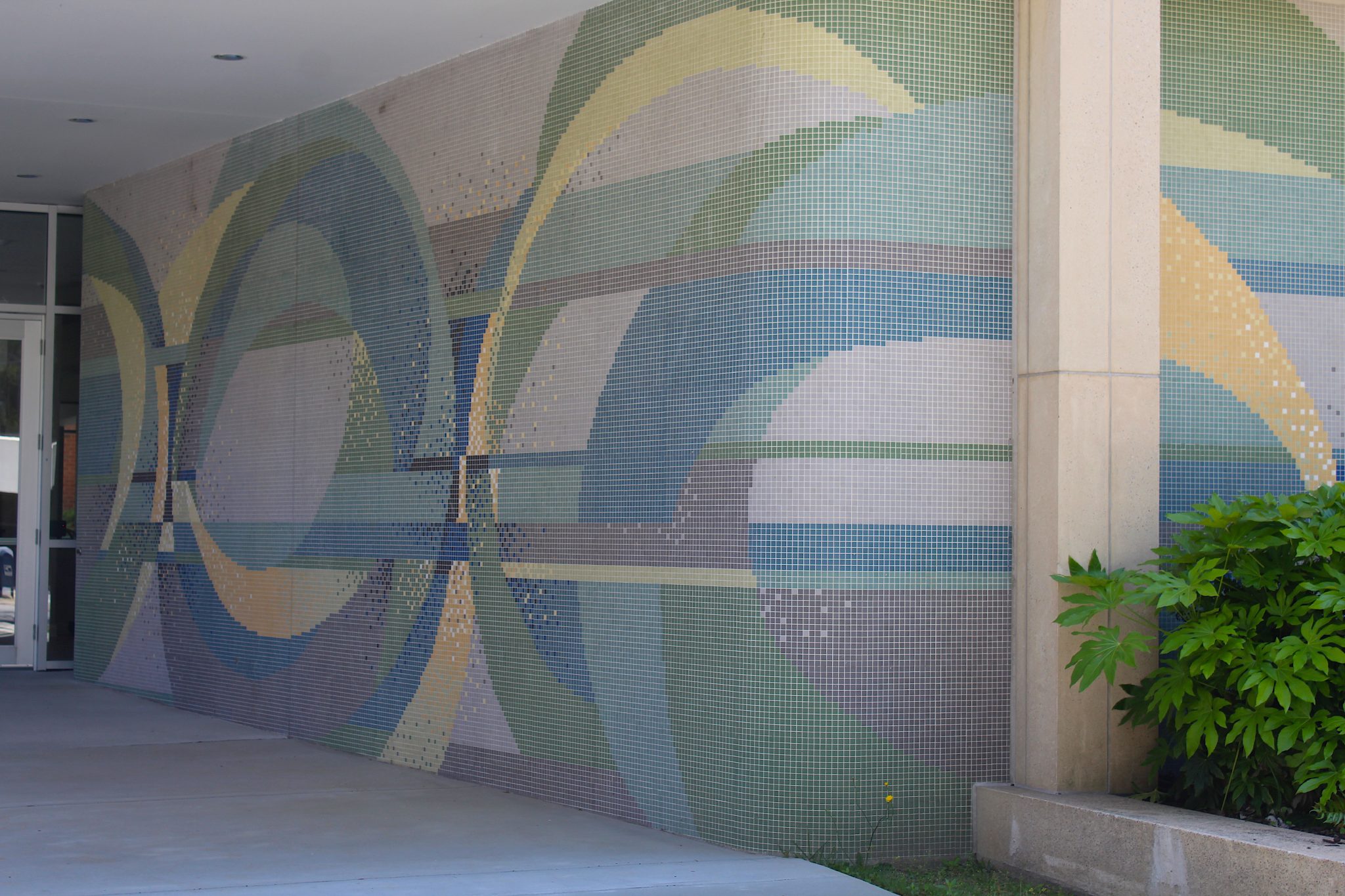
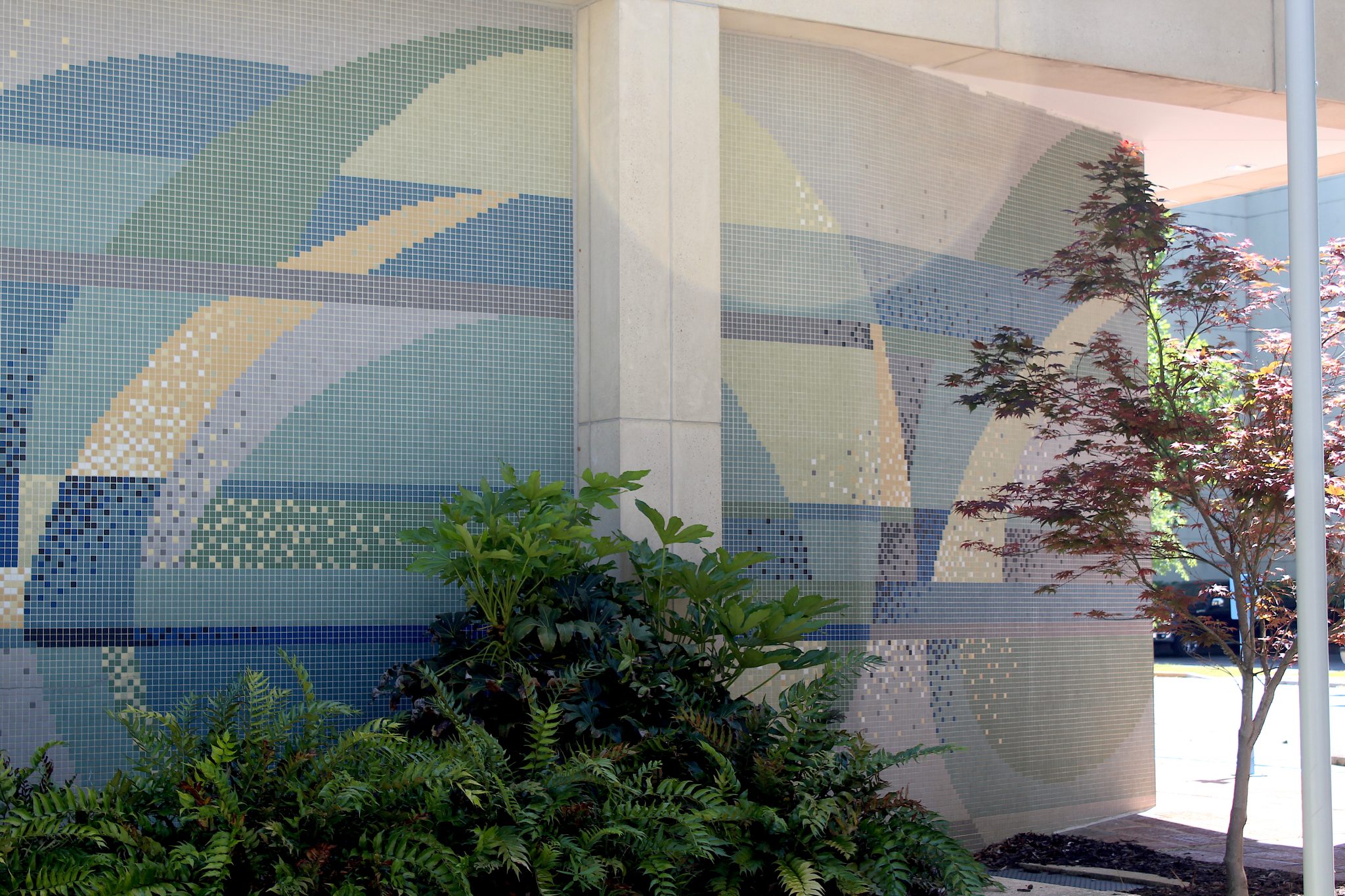
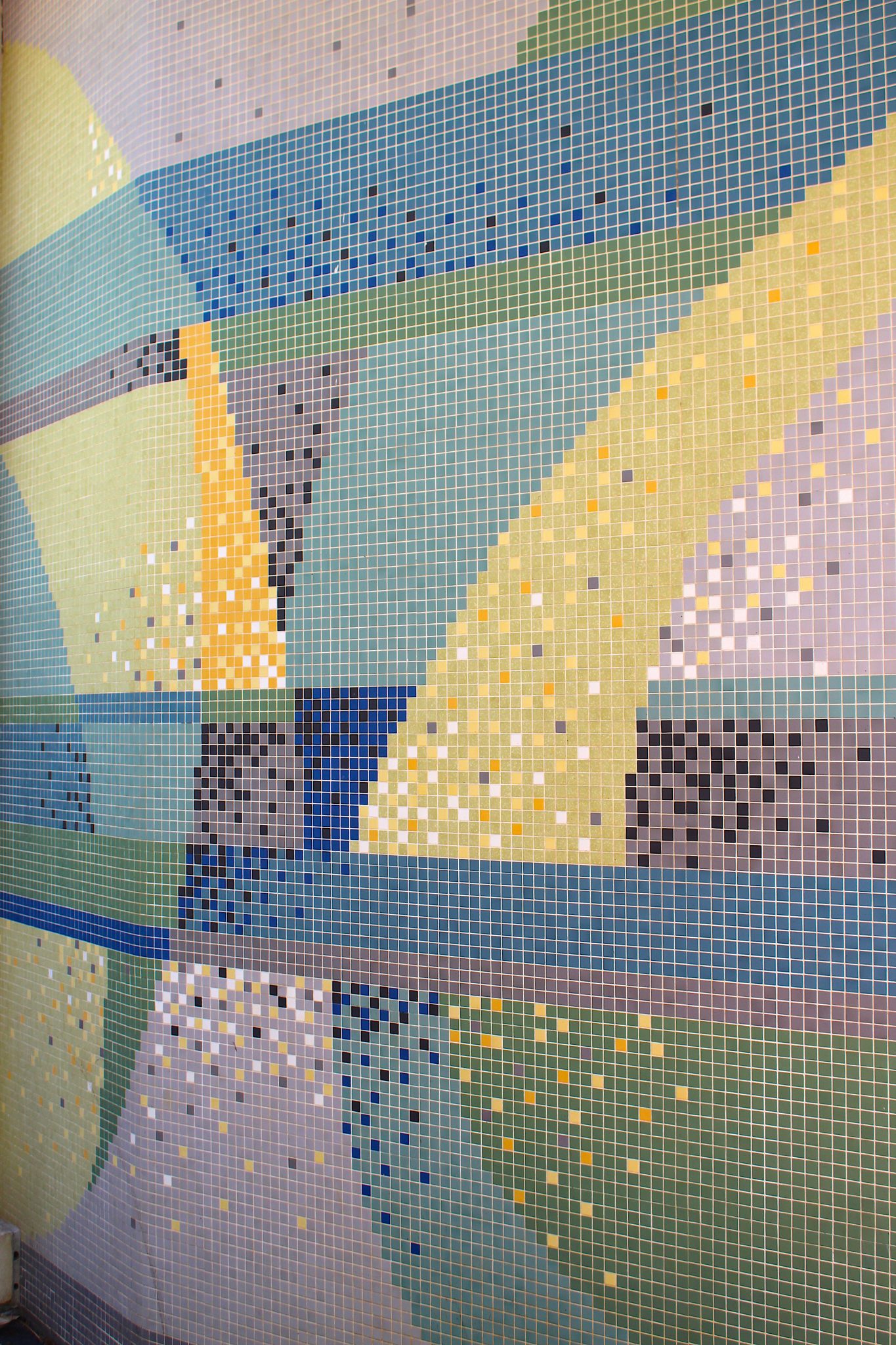
Catharine created this mosaic mural out of 1x1 inch ceramic tiles in 1973. When she first made the piece, it surrounded three of the exterior walls and even wrapped slightly inside the building. Sadly, now the inside portion has either been taken down or covered up, so the exterior sides are the only viewable parts. The American Olean Tile Company based out of New York, was responsible for the making of the tiles used in this mural. The tile contractor was Niggel Associates Inc. (carrier and shipper in Columbia, SC) and the architect firm was Upshur, Riley, and Bultman.
The mural contains an abstract, concentric circle theme using cool colors such as grays, blues and greens, throughout the piece. According to the American Olean Tile Company, this mural contains eleven different colors among the tiles: Dove Gray, Dawn Gray, Sapphire, Emerald, Avocado, Aqua, Amber, Cobalt, Citrin, Ebony, and White.
The colors shape the circular forms and break the piece up into its abstractness. There is not much informationon what inspired her to create this mural, but after taking a good look into her experiences, her art and the building, some conclusions could be drawn. Since it is known that she took inspiration from some twentieth century artists, their works can be compared in certain ways to this abstract ceramic mosaic.
About Rembert:
Catharine Rembert was a local Columbia artist who grew up in South Carolina. She was born in 1905 in Columbia, SC and passed away in 1990. As a child, she was said to always be into art. Her sister Elizabeth even stated in a letter that Catharine would sew clothing for their dolls, being able to see a dress and create it without a pattern. She grew up in the Greenwood area where she actually took special art classes at Lander while still in high school, along with attending a women’s school for a brief time.
In 1925, Rembert began attending college at the University of South Carolina Columbia. As a student, she participated in many clubs and organizations such as the yearbook staff, co-ed glee club, press club, sketch club, euphrosynean literary society, YMCA cabinet, choral society, and many more. Being part of the yearbook staff, Catharine was able to create many of the spreads for the yearbook, expressing her artistic abilities. And in 1927, she became the first graduate of the University of South Carolina’s art department.
The week after graduation, she was offered a job with the faculty of the art department. She began working as the assistant to Catherine Heyward, the head of the art department, at the rate of $22 a month. Even as she was teaching at the University, she was also still learning herself, at schools such as The California School of Fine Arts, Parsons School of Design in New York, and the Ozenfant Art School. She even traveled to Canada, Mexico, and Europe for more learning opportunities. She even opened up her own design studio in 1963 on Senate Street in Columbia, SC. After 40 years of working and teaching at the college, in 1967 she retired. Although she stopped working at the University, she still taught at Richland Art School and even taught youth at The Columbia Museum Art School. She “maintained an active professional life as a fabric and graphic design consultant.” In 1990, she received the Elizabeth O’Neill Verner’s Award and shortly afterwards passed away calmly and unexpectedly in her sleep.